What Does Sports Massage Treat: an Athlete's Guide
- 3 days ago
- 8 min read
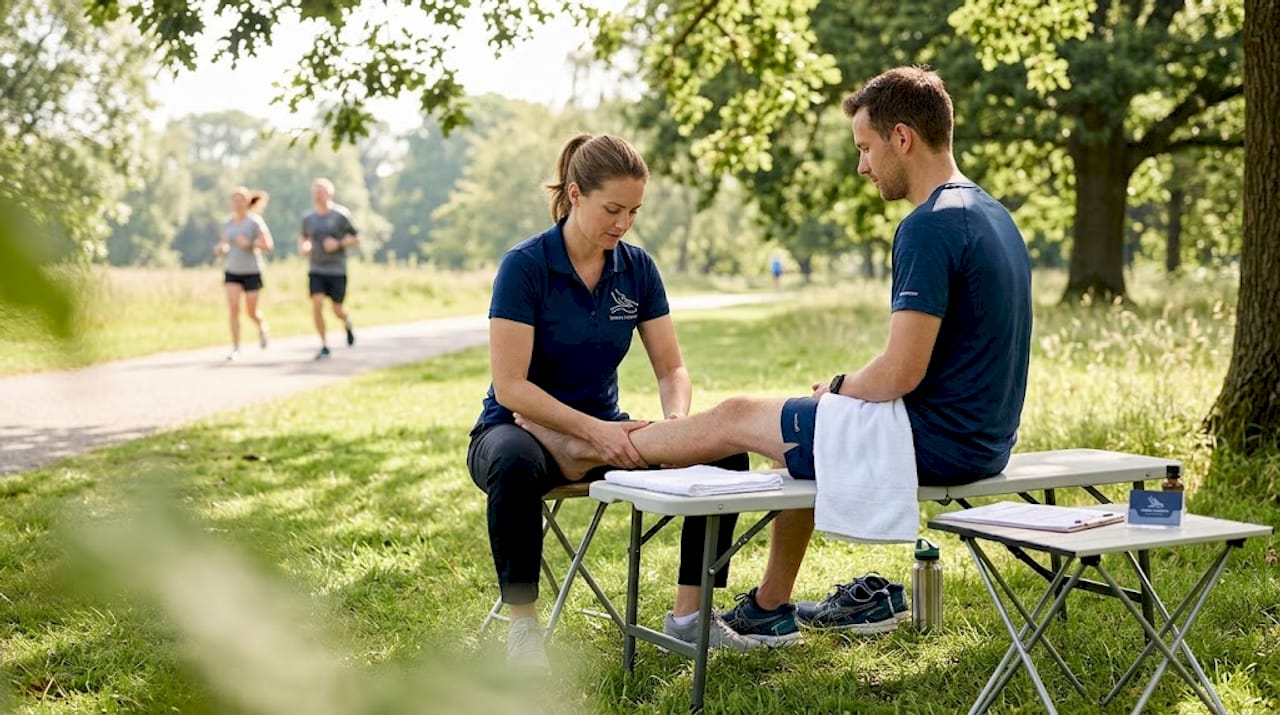
Sports massage is one of the most misunderstood tools in an athlete’s recovery kit. Most people assume it’s just a firmer version of a relaxation massage. It’s not. What does sports massage treat, exactly? The answer covers a surprisingly wide range of conditions: delayed onset muscle soreness, overuse injuries, scar tissue buildup, restricted range of motion, muscular imbalances, and performance plateaus. Understanding the difference between a therapeutic sports massage and a spa rubdown could genuinely change how you train, recover, and stay injury-free.
Table of Contents
Key takeaways
Point | Details |
Targets muscle soreness directly | Sports massage 24-48 hours post-exercise reduces DOMS and clears metabolic waste faster than rest alone. |
Treats overuse injuries | Techniques like myofascial release and trigger point therapy address chronic tightness and tissue dysfunction. |
Timing changes the outcome | Pre-event, post-event, and maintenance sessions each treat different problems and require different techniques. |
Not a cure-all | Sports massage does not effectively treat nerve compression, joint degeneration, or systemic inflammation. |
Works best in combination | Pairing sports massage with stretching, hydration, and strength work delivers the strongest recovery results. |
What does sports massage treat: muscle soreness and mobility
If your legs feel like concrete after leg day or your shoulders seize up after a long swim, you’re dealing with delayed onset muscle soreness. DOMS typically peaks between 24 and 72 hours after intense exercise, and that window is exactly when sports massage does its best work. Optimal massage timing clears metabolic waste and reduces soreness more effectively than passive rest.
The mechanism isn’t complicated. Sports massage increases local circulation, which accelerates the removal of inflammatory byproducts like lactate and prostaglandins. More blood flow also means more oxygen and nutrients reaching damaged muscle fibers. The result is faster tissue repair and a shorter window of discomfort.
Range of motion is another area where sports massage delivers real, measurable results. Tight hip flexors, stiff thoracic spines, and locked-up ankles are common in athletes who train hard without enough recovery. A skilled therapist can loosen these restrictions during a session, and you’ll often notice the difference immediately.
Key benefits for muscle soreness and mobility include:
Reduction in DOMS severity and duration
Short-term improvements in joint range of motion
Enhanced muscle perfusion after intense training
Faster return to full training capacity between sessions
Research backs this up. Both sports massage and lymphatic drainage outperform passive rest in reducing inflammation markers and improving pressure pain thresholds within 72 hours post-exercise. And when compared to stretching alone, massage significantly outperforms stretching for DOMS reduction. Stretching has its place, but it won’t get you out of serious soreness the way targeted soft tissue work will.
Injury prevention, rehab, and tissue health
This is where sports massage earns its clinical reputation. It’s one thing to feel better after a session. It’s another to actually reduce your injury risk and support your body’s ability to handle training loads over time.
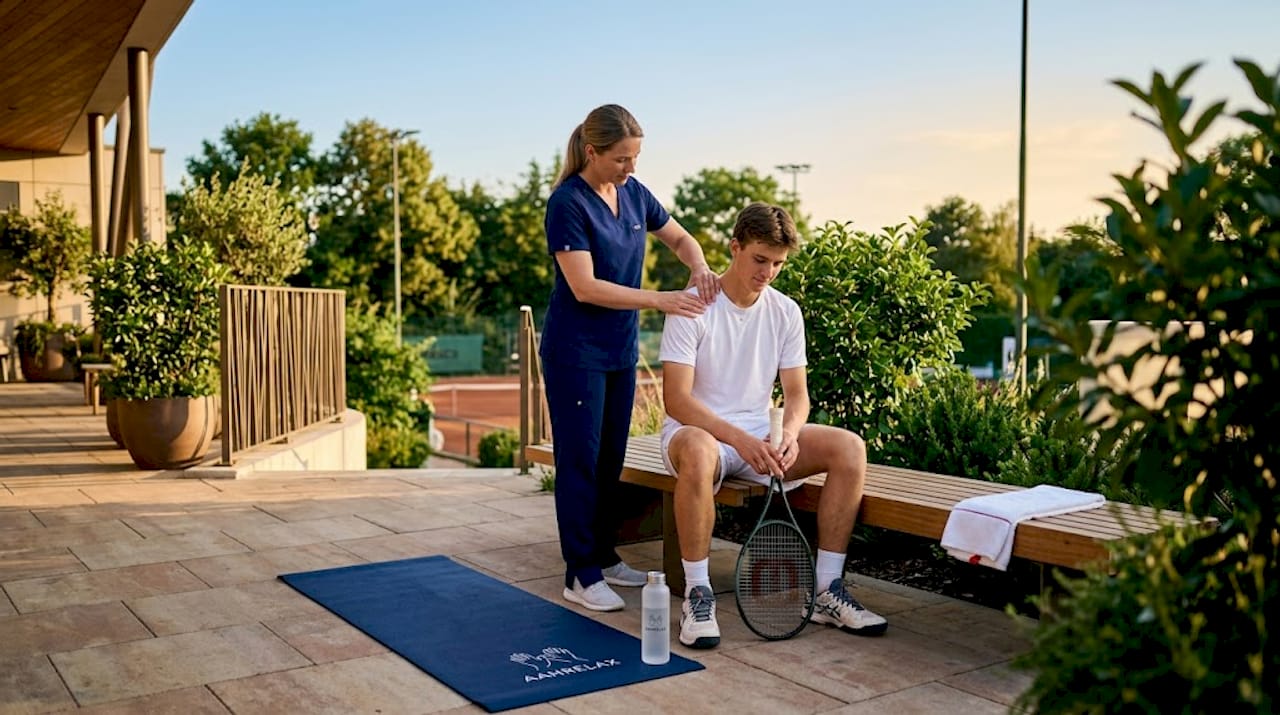
Sports massage addresses overuse injuries that accumulate quietly before they become acute problems. Conditions like IT band syndrome, plantar fasciitis, rotator cuff tendinopathy, and patellar tendinopathy all involve soft tissue dysfunction. Regular therapeutic work can interrupt the cycle of tightening, compensation, and eventual breakdown.
Scar tissue is another major target. When muscles and fascia sustain microtrauma, the body lays down collagen fibers in a disorganized pattern. Over time, this creates adhesions that restrict movement and create hotspots for future injury. Sports massage techniques, particularly myofascial release, break down these adhesions and realign tissue fibers. According to research, 61% of consumers seek massage specifically for medical benefits like scar tissue breakdown and preventing joint locking.
The main techniques used in injury-focused sports massage include:
Myofascial release: Slow, sustained pressure into connective tissue to free restrictions
Trigger point therapy: Focused pressure on hyperirritable spots in the muscle belly that refer pain elsewhere
Deep transverse friction: Applied directly to tendons and ligaments to promote proper collagen remodeling
Effleurage and petrissage: Rhythmic strokes and kneading that improve circulation and warm up tissue
Sports massage fits naturally into a rehab program. Most physical therapists and sports medicine practitioners will recommend it as a complement to corrective exercise and manual therapy. It doesn’t replace those interventions. It makes them more effective by preparing tissue for movement and reducing residual tension after training. Athletes dealing with golf-related muscle tightness or youth baseball training overuse often benefit from integrating sports massage into their weekly training plans.
Pro Tip: Schedule your maintenance sports massage 48-72 hours before your next hard training session, not the day before. Your muscles need a recovery window after deep tissue work before they’re primed to perform.
Timing and types of sports massage treatments
Not all sports massages are the same. The session your therapist gives you two days before a race looks nothing like the one you need 48 hours after a marathon. Matching the type of massage to your training phase is what separates effective therapy from guesswork.
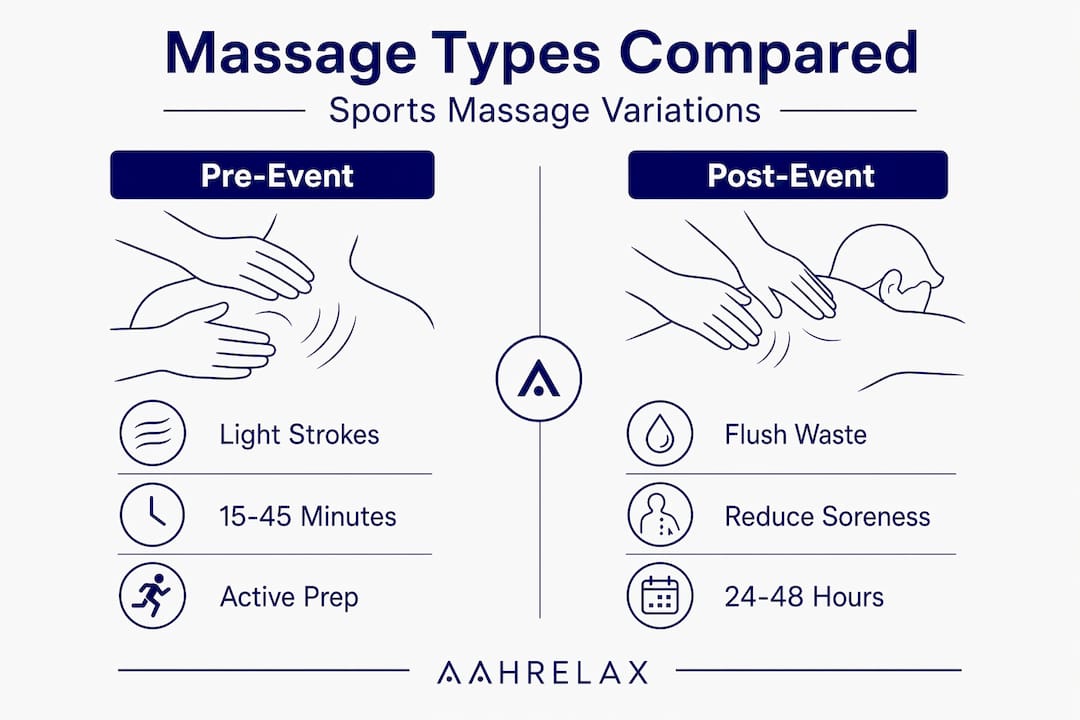
Here’s how the three primary formats differ:
Type | Timing | Intensity | Primary purpose |
Pre-event | 15-45 min before competition | Light, stimulating | Wake up tissue, enhance readiness |
Post-event | Within 24-48 hours after exercise | Moderate to deep | Clear waste, reduce soreness |
Maintenance | Weekly or bi-weekly during training | Deep, therapeutic | Address chronic issues, restore function |
Pre-event massage is brief and deliberate. It uses lighter strokes to increase circulation and neuromuscular activation without fatiguing the tissue. Research shows that post-warm-up sports massage improves sprint performance by nearly 4% in competitive athletes. The key is timing it correctly after the warm-up, not as a replacement for it.
Post-event sessions are where most athletes focus, and rightly so. The goal is flushing out metabolic waste, reducing inflammatory responses, and beginning the tissue repair process. This is the session that shortens the gap between your hard training day and your next quality workout.
Maintenance massage is the least glamorous but arguably the most valuable over time. These sessions go deeper and take longer. They address the chronic tension and movement dysfunction that builds up across a training cycle. Think of it as a periodic tune-up. You find the problems while they’re still manageable, before they become actual injuries.
Sports massage techniques vary by session type: effleurage is common across all three formats, while petrissage, myofascial release, and trigger point work are reserved primarily for post-event and maintenance contexts.
Pro Tip: If you’re new to sports massage, start with a post-event session after a moderately hard workout rather than after your hardest training day of the week. This lets your therapist assess your tissue baseline and calibrate pressure appropriately.
Evidence-based limits of sports massage
Sports massage is genuinely effective. But it’s also genuinely limited, and athletes who understand those limits use it smarter.
The honest picture: reliable benefits from sports massage are real but modest. You’re looking at meaningful improvements in muscle soreness, pain management, and short-term mobility. You are not looking at dramatic performance transformations or the elimination of injury risk.
Conditions sports massage does not effectively treat include:
Nerve compression syndromes like sciatica or carpal tunnel, where the root cause is structural
Joint degeneration, including osteoarthritis, which requires medical management
Systemic inflammatory conditions like rheumatoid arthritis, which have autoimmune components
Acute muscle tears or ligament ruptures, where deep pressure can worsen damage
Stress fractures, where soft tissue work does nothing to address bone pathology
Sports massage is best understood as an adjunct therapy, not a standalone solution. Pair it with physiotherapy, strength training, and proper hydration for the strongest outcomes.
Speaking of hydration: drink water before and after your sessions. Seriously. Deep tissue work on a dehydrated body produces more discomfort and can actually impede recovery outcomes by limiting the body’s ability to flush metabolic byproducts. Aim for at least 16 ounces of water before a session and another 16-24 ounces within an hour afterward.
Combining massage with sequenced stretching post-exercise also delivers superior results compared to massage alone. Research shows this combination improves lactate clearance and enhances knee flexion range of motion beyond what either intervention achieves independently.
My honest take on sports massage for athletes
I’ve worked with enough athletes and active clients to say this clearly: sports massage is one of the most underutilized recovery tools out there, and it’s also one of the most misused.
The most common mistake I see is timing. Athletes book a deep session the night before a race because they feel tight. That’s the worst possible moment for deep tissue work. You need recovery time after therapeutic massage. That tight feeling the evening before competition is best addressed with light mobility work and sleep, not an intense myofascial session.
The second most common mistake is treating massage as a substitute for addressing root causes. I’ve seen runners use weekly sports massage to manage chronic IT band pain for months without ever examining their hip abductor strength or running mechanics. The massage feels good and provides relief. But it’s a patch, not a fix, if you’re not also addressing why the tissue is dysfunctional in the first place.
What I’ve learned, genuinely, is that sports massage works best when you’re honest about what it’s for. It’s a recovery tool. It’s a maintenance tool. It treats real, specific conditions in muscle tissue. It does not treat everything. When you use it correctly and combine it with good training practices, it makes a real difference. When you treat it as a cure-all, you end up disappointed and possibly undertreated for something that needed a different intervention.
Find a qualified practitioner who asks about your training schedule and goals before touching you. A good sports massage therapist will adjust technique and depth based on where you are in your training cycle, not just how hard you ask them to press.
— AahRelax
Book your recovery session at home
You work hard. Your recovery should work just as hard for you.

At Aahhrelax, we bring professional sports massage directly to your home in Los Angeles County and Orange County. No driving. No waiting rooms. Just skilled, trusted therapists who show up ready to work on what you actually need. Whether you need a focused post-event session or a longer 90-minute deep recovery massage between training cycles, we have you covered.
Our therapists are experienced with athlete-specific needs, from pre-competition prep to rehabilitation maintenance sessions. We also offer in-home chair massage for quick, targeted muscle relief without a full setup. Book your personalized session at Aahhrelax and let recovery come to you.
FAQ
What conditions does sports massage treat most effectively?
Sports massage most effectively treats delayed onset muscle soreness, overuse injuries, muscular imbalances, and scar tissue buildup. It also improves short-term range of motion and supports faster recovery between training sessions.
How soon after exercise should I get a sports massage?
The optimal window for post-event sports massage is 24 to 48 hours after intense exercise. This timing maximizes metabolic waste clearance and soreness reduction without working on acutely stressed tissue.
Can sports massage prevent injuries?
Regular sports massage reduces injury risk by addressing tissue dysfunction, breaking down adhesions, and identifying muscular imbalances before they become acute problems. It works best as part of a broader prevention strategy that includes strength work and proper training load management.
Is sports massage different from deep tissue massage?
Yes. Sports massage is goal-oriented and timed to athletic training phases, using specific techniques like trigger point therapy and myofascial release. Deep tissue massage focuses broadly on tension and chronic pain without the performance or recovery context that defines sports massage.
What should I do after a sports massage session?
Drink plenty of water, avoid intense training for at least 24 hours after deep work, and consider pairing your session with light stretching. Combining massage and sequenced stretching has been shown to improve lactate clearance and overall recovery markers better than massage alone.
Recommended
Comments