What Does a Mobile Therapist Bring to Your Session?
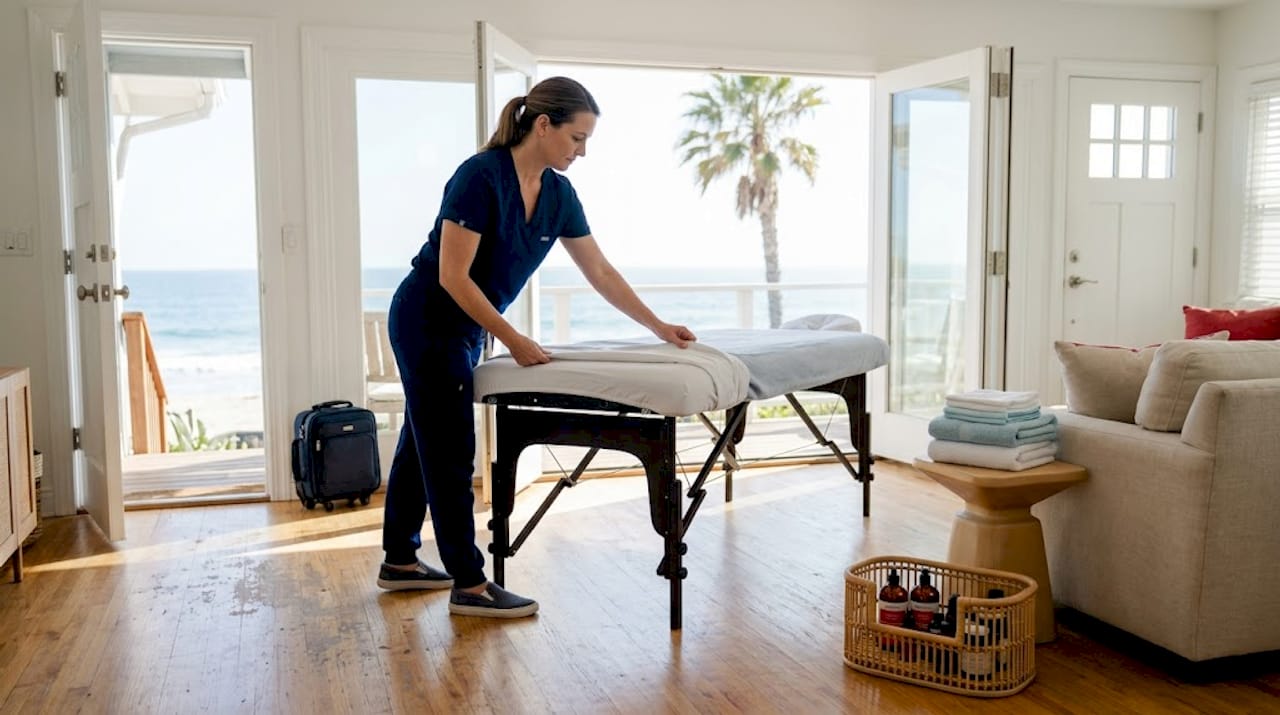
Most people assume a mobile therapist shows up with little more than a folding table and good hands. The reality is far more layered. Understanding what does a mobile therapist bring means looking at professional-grade equipment, therapeutic supplies, digital tools, and personalized expertise that together create a genuine clinical experience in your home. The convenience is obvious. What surprises clients is the depth of preparation behind every visit. This guide breaks it all down so you know exactly what to expect, what questions to ask, and why mobile therapy has become the preferred choice for so many people in 2026.
Table of Contents
Key takeaways
Point | Details |
Full professional setup | Mobile therapists arrive with tables, linens, oils, and wellness tech to match clinic-quality care. |
Environment used as a tool | Therapists observe your home or workspace to tailor treatment to your real daily movements. |
Tech-assisted sessions | Portable diagnostic devices and wearable sensors help therapists assess and monitor your progress accurately. |
Clear session structure | Every visit follows a predictable flow from setup through treatment to cleanup, typically under an hour. |
Wider accessibility | Mobile therapy reaches seniors, busy professionals, and mobility-limited clients who cannot easily visit a clinic. |
What a mobile therapist brings to every session
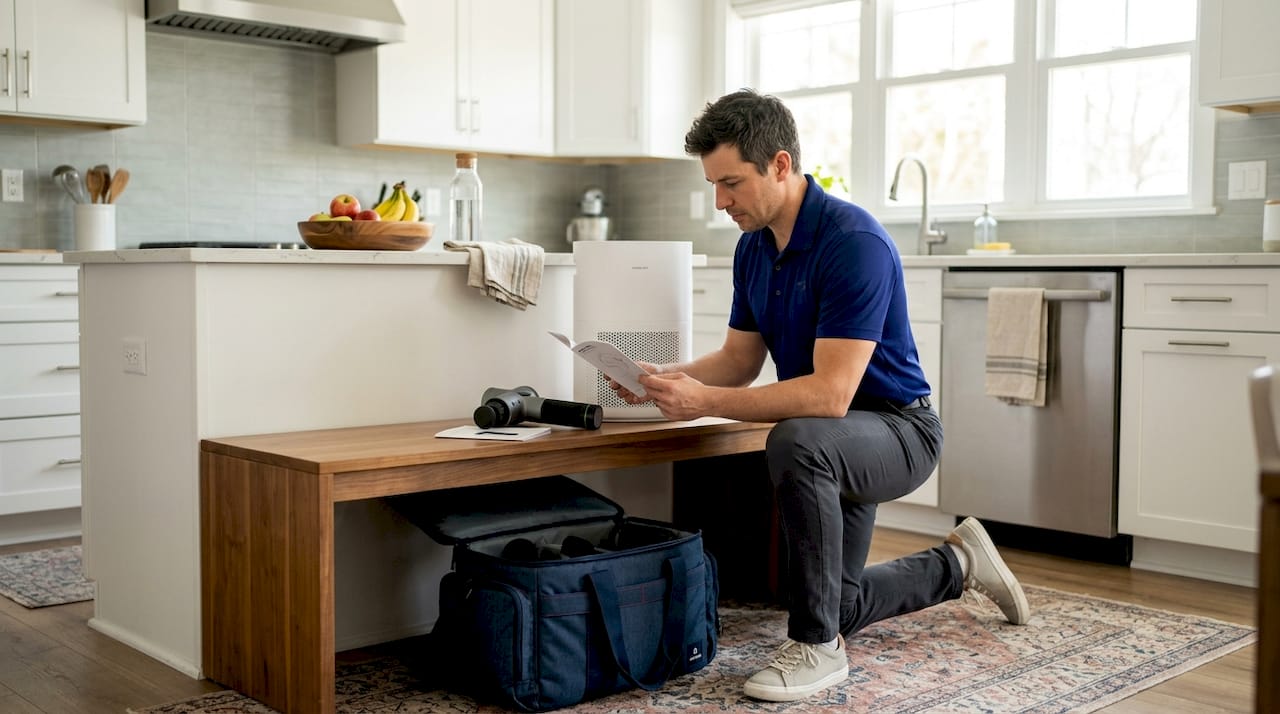
The short answer: a lot more than you’d expect. Mobile practitioners arrive fully equipped with professional-grade portable tables, fresh linens, therapeutic consumables like oils or lotions, and often portable wellness technology such as percussion devices or air purifiers. That is the standard baseline for any credible mobile therapist.
Here is a breakdown of the core mobile therapy supplies you can expect at a typical session:
Portable massage or therapy table: Lightweight aluminum frames that support up to 450 lbs, with adjustable height settings for proper body mechanics on the therapist’s end and maximum comfort on yours.
Fresh linens and face cradle covers: Changed between every client. Hygiene is non-negotiable, and professional therapists bring multiple sets.
Therapeutic oils, lotions, and balms: Chosen based on your skin type and treatment goals. Deep tissue work uses firmer, less slippery products. Relaxation massages use lighter, aromatic blends.
Percussion massage devices: Brands like Theragun or Hypervolt are increasingly standard for warm-up and recovery work before and after hands-on treatment.
Portable HEPA air purifiers: Used to manage air hygiene in client homes, keeping the session environment clean and allergen-reduced. Low-noise models are preferred so they do not disrupt the experience.
Smart power strips: Allow therapists to run devices safely from your outlets without drawing excessive current or interfering with your home systems.
Bolsters and positioning cushions: For proper body alignment during treatment, especially for prenatal, senior, or post-surgical clients.
Sanitation supplies: Medical-grade wipes, hand sanitizer, and spray disinfectants for surfaces and equipment between uses.
Pro Tip: Ask your therapist in advance whether they bring their own massage oil or prefer you provide it. Most professionals carry several formulations, but if you have a known allergy or prefer a specific scent, mention it at booking so they can accommodate you.
How therapists use your home environment as part of treatment
This is where mobile therapy genuinely separates itself from clinic visits. Your home is not just a convenient backdrop. It is a source of clinical information.
Therapists observe daily mobility hazards like narrow spaces or stairs in your home to tailor recovery plans more effectively than any traditional clinic evaluation could. They watch how you move through your own space, which tells them things no intake form ever will.
Here is how a skilled mobile therapist uses your environment during a session:
Assessing functional movement in real spaces. A therapist working with a post-surgery knee patient will observe how that client navigates actual stairs, not a simulated clinic step. This reveals compensations and risks specific to the client’s life.
Incorporating home furnishings into exercises. A stable chair, a wall, or a countertop becomes therapeutic equipment. Exercises are designed around what you actually have access to between sessions.
Identifying ergonomic hazards. A desk set at the wrong height, a mattress that is too soft, or a bathroom without grab bars are all treatment-relevant findings a home visit uncovers immediately.
Customizing follow-up plans. Integrating therapy into real-world environments promotes faster and more sustainable recovery outcomes because the exercises and habits fit the client’s actual daily context.
Reducing white-coat anxiety. Many clients, particularly seniors and children, perform and communicate better in their own space. Therapists get truer baselines on pain levels, range of motion, and comfort.
Pro Tip: Before your first mobile therapy session, do a quick walkthrough of the room where treatment will happen. Clear a 6x8 ft area around where the table will go. This saves setup time and lets the therapist focus entirely on your care from the moment they arrive.
Technology and tools mobile therapists bring in 2026
Mobile therapy is not just portable. In 2026, it is genuinely tech-enabled. The equipment used by mobile therapists has expanded well beyond the traditional kit, and the results speak for themselves.
Here is what the technology side of a modern mobile therapy session can include:
Handheld ultrasound devices: Used for soft-tissue assessment and therapeutic ultrasound treatment. These fit in a bag but deliver clinical-grade diagnostics.
Wearable motion sensors: Attached to joints to capture range-of-motion data and movement asymmetries in real time. Far more accurate than visual assessment alone.
Telehealth integration: Many mobile therapists now schedule virtual check-ins between in-person visits using secure apps. Portable ultrasound and wearable sensors for assessment, plus telehealth for virtual check-ins, together create a continuous care model that standard clinics struggle to replicate.
App-based home programs: Therapists assign exercises through apps like PhysiApp or HEP2go, complete with video demonstrations, so you always know what to do between visits.
The following table shows how different portable tools serve different therapeutic goals:
Tool | Primary use | Benefit to client |
Percussion device | Muscle warm-up and recovery | Reduces soreness, improves circulation |
Handheld ultrasound | Soft-tissue diagnosis and therapy | Clinical accuracy without clinic visit |
Wearable motion sensor | Movement assessment | Objective data on progress and asymmetry |
HEPA air purifier | Air quality management | Cleaner, more comfortable session environment |
Telehealth app | Between-session check-ins | Continuous support and accountability |
Portable HEPA purifiers and smart power solutions are increasingly considered standard mobile clinic equipment, not add-ons. Clients with allergies or sensitivities especially benefit from this level of environmental control.
Types of mobile therapy and what to expect from each
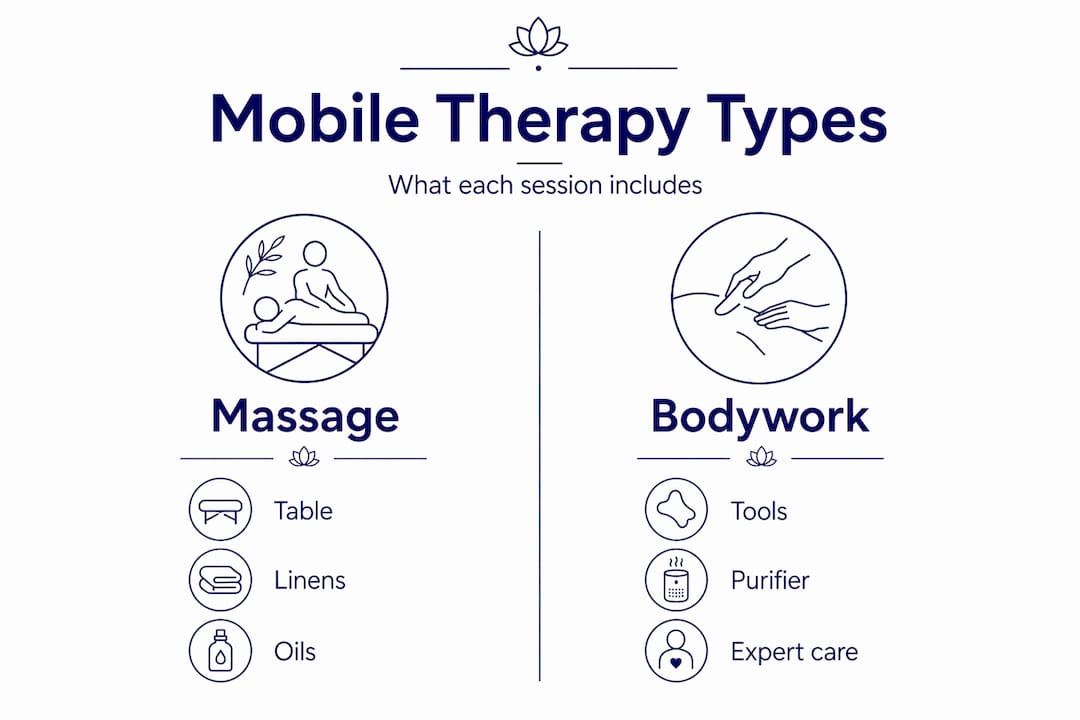
Mobile therapy covers more ground than most people realize. Knowing which service you need helps you understand what to expect from mobile therapy before the therapist ever knocks on your door.
Service type | What they bring | Best suited for |
Mobile massage therapy | Table, linens, oils, music, aromatherapy | Stress relief, muscle tension, recovery |
Mobile physical therapy | Resistance bands, sensors, therapy tools | Post-surgery, injury rehab, chronic pain |
Prenatal massage | Pregnancy bolsters, specialized positioning | Expectant mothers in second or third trimester |
Senior massage | Gentle tools, low table or chair option | Elderly clients with limited mobility |
Sports massage | Percussion devices, compression aids | Athletes in training or post-competition recovery |
Every mobile session follows a predictable structure. A typical session flows through arrival and setup (5 to 8 minutes), intake and screening (5 minutes), treatment (20 to 30 minutes for shorter sessions, up to 90 minutes for extended appointments), closure and client education (5 to 10 minutes), and sanitation and packing (5 minutes).
What this means for you as the client:
You do not need to do anything except clear a reasonable space and be present.
The therapist handles all setup and breakdown, including laundering protocols for their own linens.
You will receive post-session guidance, whether that is hydration reminders, stretches, or follow-up scheduling.
Your preferences, from room temperature to music to pressure level, are addressed before treatment begins.
Why more people are choosing mobile therapy
The practical advantages of mobile therapy go beyond simple convenience. Clients experience reduced fatigue and better exercise adherence when therapy is delivered in their own environment, which directly improves recovery outcomes.
Here is why mobile therapy has grown so significantly as a preferred care model:
No commute, no waiting room. You start recovering the moment the session ends, not after a 30-minute drive home through traffic.
Personalized setup every time. Your therapist adjusts to your space, your schedule, and your treatment goals, not a clinic’s calendar.
Better focus on healing. Being in your own environment lowers cortisol levels and lets your nervous system drop into parasympathetic mode faster. That is where healing happens.
Accessibility for those who need it most. Mobile services deliver therapy directly in clients’ homes or workplaces, reaching people with mobility challenges or those who cannot reliably access traditional care facilities.
Consistency and follow-through. Clients in home-based programs are more likely to complete their full course of treatment because the barrier to attendance is nearly zero.
For seniors, new parents, recovering athletes, and busy professionals in cities like Los Angeles, these are not small advantages. They are the difference between a treatment plan that works and one that gets abandoned after the second visit.
My take on what makes a mobile therapist truly exceptional
I’ve worked with clients across a wide range of settings, and what I’ve learned is that the gear matters, but the preparation behind the gear matters more. A therapist who shows up with a beautiful kit but hasn’t thought through the hygiene protocols for a client’s pet-heavy home, or who hasn’t confirmed whether the apartment has an elevator, is going to deliver a compromised session regardless of their clinical skills.
What I’ve seen separate the best mobile therapists from the rest is a kind of operational discipline that most clients never notice because it works so well. Maintaining clinical hygiene standards in varied environments requires compact, resilient kits. That means pre-packed, labeled bags. It means checking in with clients the day before to understand the space. It means carrying backup linens and a secondary oil option without being asked.
The technology conversation is real, but I’d caution against over-indexing on it. Wearable sensors and telehealth apps add genuine value. But the reason clients come back, and the reason mobile therapy builds such strong loyalty, is the human element. The fact that a skilled therapist came to your space, learned your routines, and tailored every recommendation to your actual life. That is what no clinic visit replicates. Personalized therapeutic massage is only possible when the therapist fully understands the context you live and move in. Mobile therapy makes that understanding unavoidable from session one.
— AahRelax
Experience luxury mobile massage with Aahhrelax
If you are ready to see firsthand what a professional mobile therapist brings to your door, Aahhrelax makes it effortless.
Aahhrelax serves Los Angeles County and Orange County with a full roster of skilled massage therapists who arrive completely prepared for every session. Whether you need a 90-minute home massage for deep relaxation and recovery, a senior massage tailored to gentle, mobility-focused care, or a chair massage at home when you want quick, targeted relief without the full setup, Aahhrelax has you covered. Every therapist brings their own professional equipment, fresh linens, and premium oils. You just open the door. Tips are included and booking takes minutes. Your next session is closer than you think.
FAQ
What does a mobile therapist bring to a home session?
A mobile therapist brings a portable therapy table, fresh linens, therapeutic oils, sanitation supplies, and often wellness tools like percussion devices or air purifiers. Everything needed for a professional, clinic-quality session is packed and carried to your location.
How long does it take a mobile therapist to set up?
Setup typically takes 5 to 8 minutes. Therapists are trained to work efficiently in home environments, and most have their kit organized for quick deployment so your treatment time is not reduced.
Are mobile therapy sessions as effective as clinic visits?
Yes, and for many clients they are more effective. Therapy delivered in your own environment improves adherence, reduces stress, and allows the therapist to tailor recovery plans to your actual daily movements and space.
Who benefits most from mobile therapy services?
Seniors with limited mobility, post-surgery patients, prenatal clients, busy professionals, and anyone who finds clinic travel difficult or disruptive benefit most from mobile therapy. It is also well-suited for athletes seeking on-site recovery support.
Do I need to provide anything for a mobile therapy session?
Most mobile therapists bring everything they need. It helps to clear a 6x8 ft space for the table and to let the therapist know in advance about any allergies, pets, or access considerations like building elevators or parking restrictions.
Recommended


Comments