Mobile Massage After a Long Workday: Your Recovery Guide
- May 27
- 8 min read
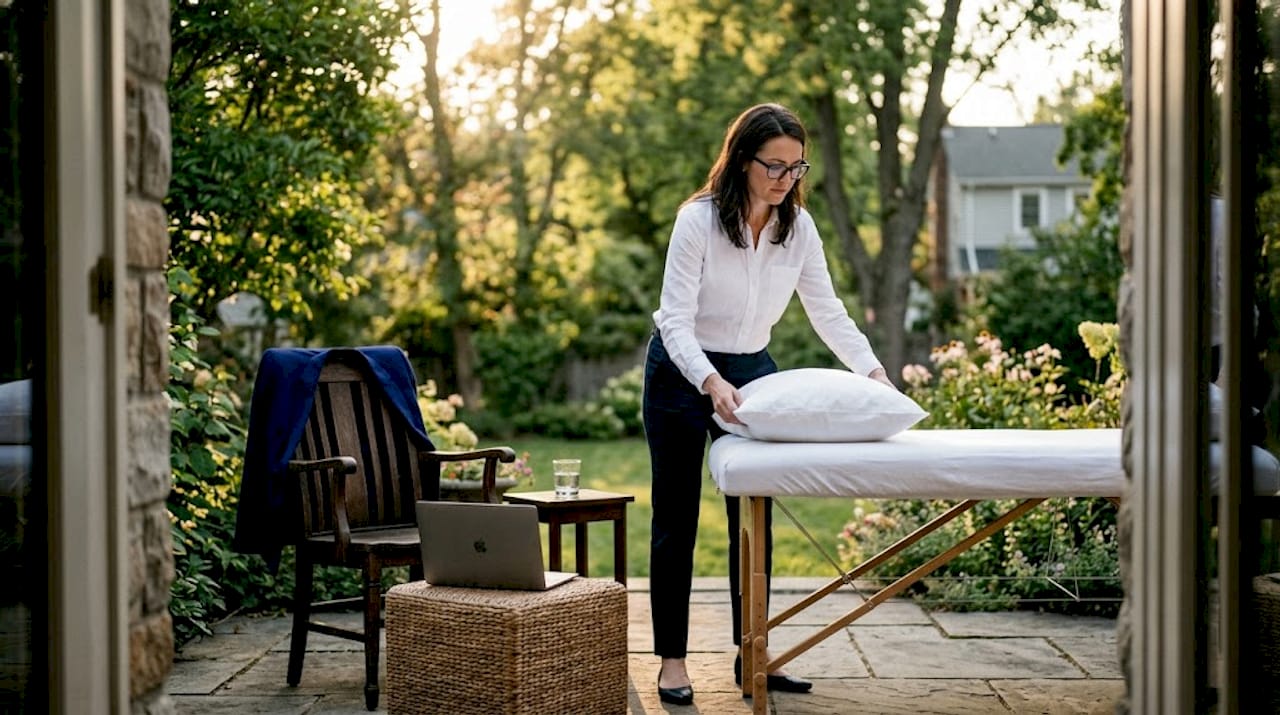
You clock out, but your body doesn’t. Shoulders locked up, neck stiff, mind still running the day’s to-do list on repeat. A mobile massage after long workday stress accumulates is one of the most practical ways busy professionals in Los Angeles and Orange County are choosing to decompress. No commute to a spa. No parking. No waiting room. A licensed therapist comes to you, and you spend that energy on actual recovery instead. This guide walks you through how to prepare, what to expect, and how to get the most out of every session.
Table of Contents
Key Takeaways
Point | Details |
Vet your provider first | Always confirm licensing and credentials before booking any in-home massage services. |
Create a transition window | Give yourself 30 to 60 minutes post-work before the therapist arrives to mentally reset. |
Match the massage to your needs | Swedish works best for general relaxation; deep tissue targets chronic muscle tension. |
Communicate during the session | Tell your therapist your pressure preference and problem areas before they begin. |
Build a consistent routine | Regular sessions improve circulation, posture, and sleep quality over time. |
What to prepare for your mobile massage after a long workday
The difference between a good session and a great one often comes down to what you do before the therapist arrives. Preparation is not just about clearing floor space. It shapes the entire experience.
Choose a licensed, reputable provider
This step matters more than most people realize. Mobile massage therapists manage their own bookings and service delivery independently, which means the burden of vetting falls on you. Look for therapists with state-issued massage therapy licenses, verified reviews, and clear service descriptions. Ask about their experience with post-workday tension, because not all therapists specialize in the same techniques.
Platforms like Aahhrelax vet their providers before listing them, which takes much of the guesswork out of the process. That alone is worth factoring into your decision.
Set up your space for relaxation
Your living room probably does not feel like a spa right now. That is fixable in about ten minutes. A sensory reset using dim lights and soft music before a mobile massage activates your body’s natural relaxation response. Your nervous system reads low-stimulation cues as a signal to downshift. Make it easy by prepping these elements ahead of time:
Dim or turn off overhead lighting; use lamps or candles instead
Queue up soft ambient music or nature sounds
Add a subtle scent like lavender or eucalyptus with a diffuser
Clear enough floor space for the massage table (roughly 7 by 4 feet)
Set the room temperature between 68 and 72 degrees
For a more detailed approach to creating a calming environment at home, this spa ambiance guide covers everything from textiles to lighting adjustments.
Schedule with intention
The timing of your session matters. Booking a massage immediately after a high-pressure meeting or a commute that had your cortisol spiking sets you up for a less effective session. Research shows that a 30 to 60 minute buffer post-work helps your body and mind separate from work stress before therapy begins. Power off work devices. Avoid checking email. Let the day close.
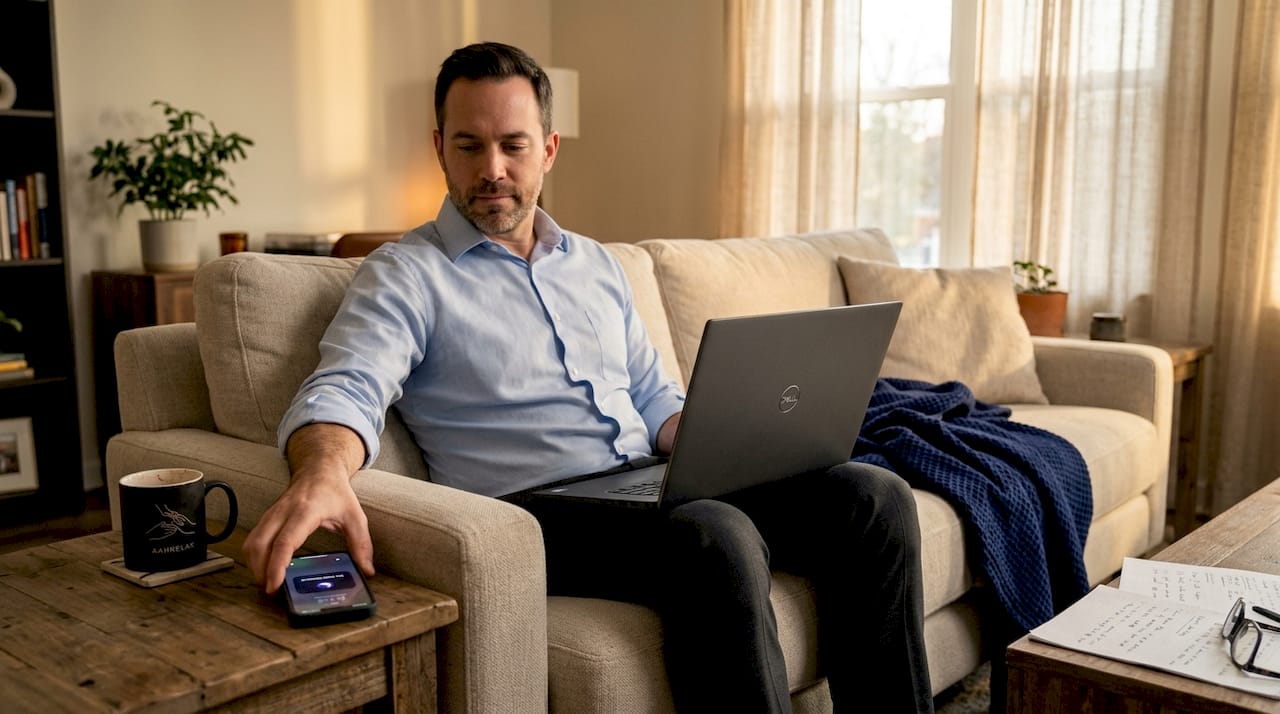
Pro Tip: Set your phone to Do Not Disturb mode at least 45 minutes before your therapist is scheduled to arrive. Even one work notification can spike your stress hormones and make the first 15 minutes of your session less effective.
Step-by-step guide to your post-workday massage session
Once your space is ready and you have booked a trusted therapist, the session itself follows a clear rhythm. Knowing what to expect removes the mental friction and helps you relax faster.
Start with two to three minutes of diaphragmatic breathing. Breathe in through the nose for four counts, hold for four, exhale for six. This activates your parasympathetic nervous system before the therapist even touches you. Experts recommend five minutes of breathing exercises before and after sessions to extend relaxation benefits significantly.
Greet your therapist and communicate clearly. Tell them where you carry tension. Common problem areas for desk workers include the upper trapezius, neck, and lumbar region. Mention your pressure preference: light, medium, or firm. This takes 90 seconds and dramatically improves the session.
Choose the right massage type. Swedish massage uses long, flowing strokes and is ideal for general stress relief and first-time clients. Deep tissue targets the connective tissue beneath the surface and works better for chronic tension and muscle knots. Sessions from 30 to 120 minutes offer different depths of relaxation depending on how much time and how much focus on problem areas you need. Chair massage is a strong option if you want a convenient, clothed session without the full setup.
Let go of the agenda. You do not need to talk. You do not need to check the time. Let the therapist guide the session. If something feels uncomfortable, say so. Otherwise, your only job is to breathe.
Post-session, move slowly. Drink a full glass of water before doing anything else. Massage increases circulation and moves metabolic waste out of muscle tissue. Hydration helps your body clear it. Avoid jumping back onto your phone for at least 20 minutes.
Pro Tip: If you experience significant soreness the day after deep tissue work, that is normal. A warm shower or gentle stretching the next morning will help your muscles integrate the work done during the session.
Mistakes that undercut your relaxation
Even a well-booked session can fall flat if a few common mistakes are in play. Here is what to avoid.
Booking an unvetted provider. Personalized service quality depends heavily on the therapist’s licensing and experience. A cheap or unverified booking can leave you tenser than when you started.
Scheduling with no buffer time. Coming straight from a stressful call into a massage means your body is still in fight-or-flight mode. The first 20 minutes of your session get wasted on just getting you to baseline.
Ignoring environmental distractions. A loud TV in the next room, a barking dog, or bright overhead lights all compete with relaxation. Address them before the therapist arrives.
Failing to communicate pressure preferences. Too light and the session feels ineffective. Too deep and you tense up defensively, which defeats the purpose. Speak up at the start and again mid-session if needed.
Skipping post-massage hydration and rest. Massage mobilizes fluids in your tissues. Skipping water and immediately returning to screens or activity cuts short the recovery your body is actively doing.
Booking your first session on your most chaotic day. Start with a moderately calm evening so you can actually notice the benefits. You will be better prepared to use massage on harder days once you know what to expect.
What results to expect and how to maintain them
A single session delivers real, measurable relief. But the professionals who get the most value from after work massage options treat it as a practice, not a one-off treat.
What one session does for you
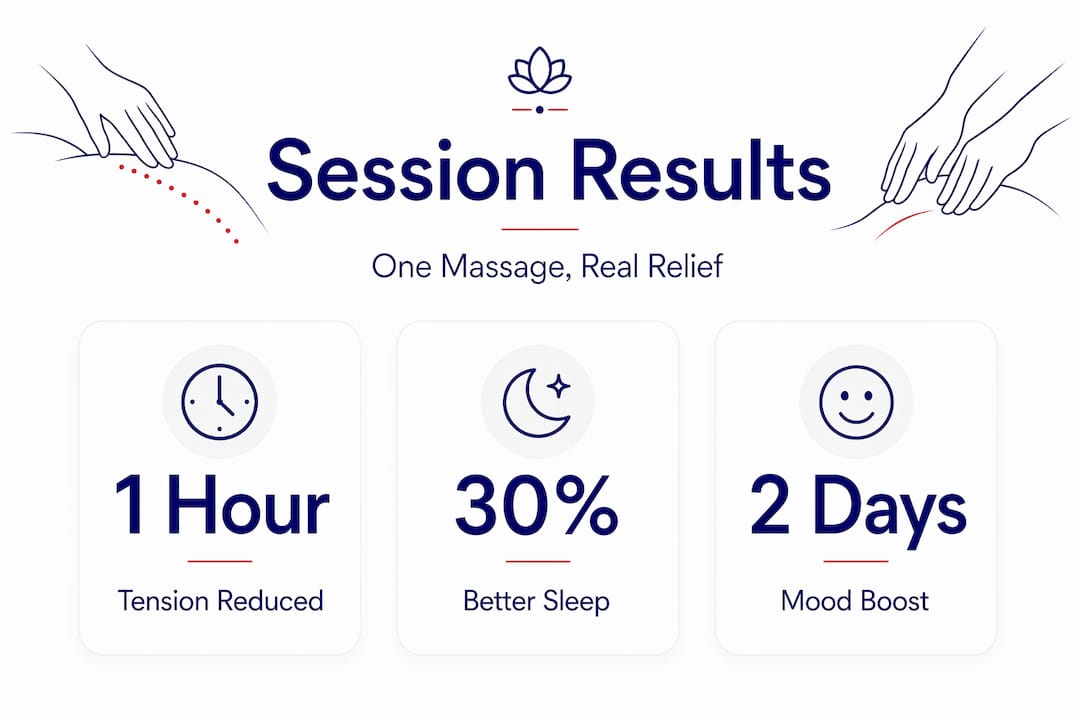
After a well-executed relaxation massage at home, most people notice reduced muscle tightness within the first hour, improved mood by evening, and better sleep quality that night. Regular sessions improve circulation, reduce persistent muscle tension, and support deeper, more restorative sleep over time.
Building a sustainable routine
The table below outlines a practical framework for integrating convenient massage therapy into your weekly rhythm based on your stress level and physical demands.
Session frequency | Best for | Recommended massage type |
Once per week | High-stress roles, physical tension | Deep tissue or Swedish, 60 to 90 min |
Every two weeks | Moderate workload, maintenance | Swedish or sports, 60 min |
Monthly | General wellness, preventive care | Swedish or lymphatic, 60 min |
As needed | Recovery from specific events | Targeted deep tissue, 90 to 120 min |
Integrating massage with intentional breathing and light environmental cues at home amplifies your overall relaxation between sessions. Stretching for five minutes before bed on session days helps your muscles retain the benefits longer.
Pro Tip: Track how you feel the morning after each session. Rate your sleep, tension levels, and mood on a scale of one to ten. After three or four sessions, you will have clear data on what frequency and duration work best for your body.
For longer or more targeted recovery, a 90-minute home massage gives your therapist enough time to address both full-body tension and specific problem areas without rushing.
My honest take on mobile massage for busy professionals
I have worked with enough busy professionals to say this clearly: the biggest barrier to consistent self-care is not cost. It is friction. When recovery requires a commute, a reservation, and 90 minutes out of your evening, most people just skip it. The few times they go, they are already exhausted before the session starts.
What I have seen work is building the routine around zero-friction options. Mobile massage removes the logistics, and that changes the psychology. When the therapist comes to you, you show up relaxed. The session starts from a better baseline. The results compound.
The concept I always emphasize with clients is the “intimacy buffer.” That 30 to 60 minute window after work, before the therapist arrives, is not wasted time. It is the setup. Power down your devices. Change clothes. Do a few slow breaths. The buffer is what separates a decent massage from one that genuinely resets your nervous system.
The other thing most people miss: the therapist you choose matters as much as the massage type. A skilled, licensed professional who asks good questions and adjusts in real time will outperform a technically proficient one who applies a fixed routine. Vet for communication style, not just credentials.
— AahRelax
Book your after-work recovery session with Aahhrelax
You should not have to choose between taking care of yourself and having a life outside of work. Aahhrelax brings licensed, trusted therapists directly to your home in Los Angeles County and Orange County, so stress relief fits into your schedule without demanding anything extra from you.

Whether you want a quick chair massage at home to decompress after a packed day or a full 90-minute deep tissue session to address weeks of built-up tension, Aahhrelax has options tailored to what you actually need. Every therapist is vetted, every session is personalized, and tips are always included in the price. No surprises. Book in minutes online and have a therapist at your door as soon as the same evening. Your workday ends. Your recovery begins.
Book your session today and experience what real post-workday relaxation feels like.
FAQ
What is a mobile massage after a long workday?
A mobile massage after a long workday is a professional massage therapy session delivered to your home or workplace by a licensed therapist, allowing you to recover from stress and tension without traveling to a spa.
How long should a post-workday massage session be?
Sessions ranging from 30 to 120 minutes cover different recovery needs. A 60-minute Swedish session works well for general stress relief, while 90 minutes gives a therapist enough time to address both full-body tension and specific problem areas.
How do I prepare my home for an in-home massage?
Dim the lights, clear about 7 by 4 feet of floor space for the massage table, set a comfortable room temperature, and add soft music or a calming scent. These small changes signal your nervous system to relax before the session begins.
How do I book a mobile massage with Aahhrelax?
Visit the Aahhrelax online booking platform, select your preferred massage type and session length, choose an available therapist, and pick a time that works for your schedule. Same-day booking is often available.
How often should busy professionals get a mobile massage?
For high-stress professionals, once per week is ideal for managing tension and improving sleep quality. Every two weeks works well for maintenance, and monthly sessions support general wellness and prevention.
Recommended


Comments