How massage therapists travel to clients in LA and OC
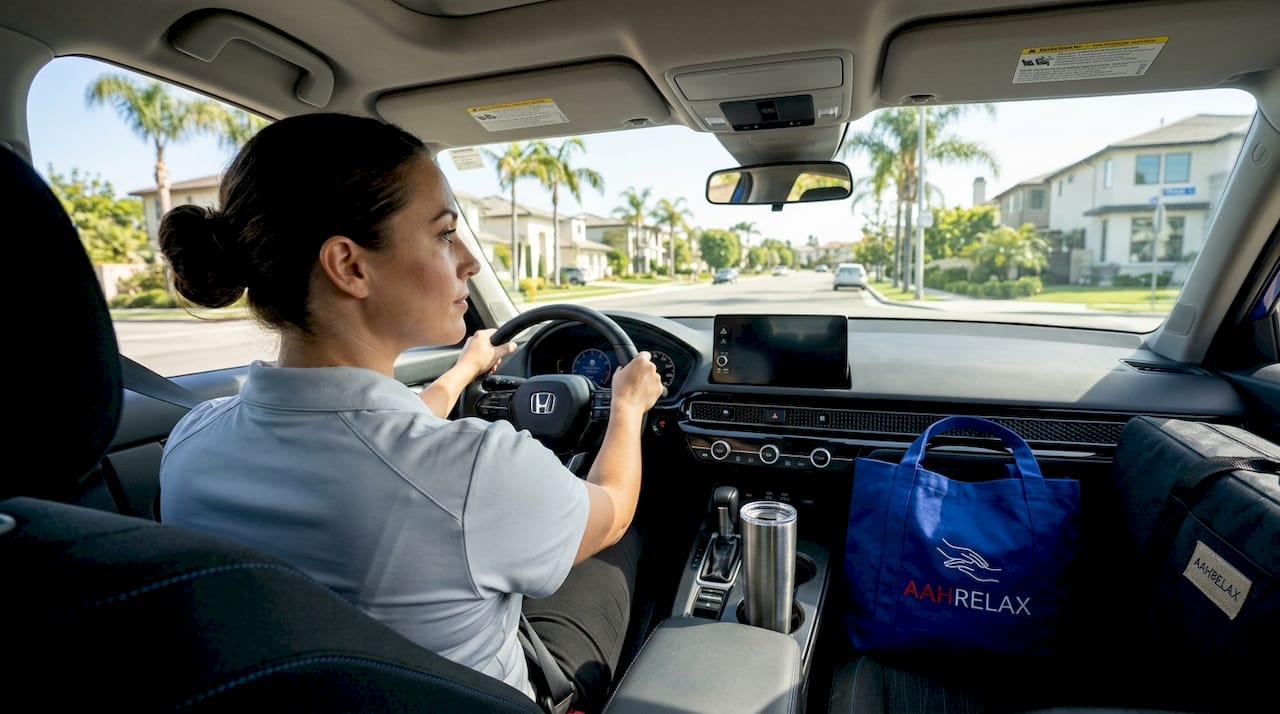
Most clients assume that how massage therapists travel to clients is simple. The therapist hops in a car, drives over, and the session begins. What gets overlooked is that travel time is not free. It costs the therapist real money, real hours, and real energy. Travel time is lost billable hours, meaning every mile driven is time not spent earning. Understanding this changes how you see mobile massage pricing, scheduling, and the care your therapist brings to your door.
Table of Contents
How mobile massage therapists set travel boundaries and fees
Scheduling strategies to ensure quality and reduce travel stress
What clients in Los Angeles and Orange County should expect from mobile massage travel policies
Rethinking travel time: why valuing the journey elevates your massage experience
Experience convenient, professional in-home massage services in Los Angeles and Orange County
Key Takeaways
Point | Details |
Travel time is billable | Travel time reduces therapists’ available work hours and must be included in pricing. |
Pricing includes travel fees | Flat travel fees and minimum booking values keep mobile massage services profitable. |
Scheduling buffers improve quality | Travel time buffers and grouping appointments ensure therapists arrive on time and sessions are stress-free. |
Clear policies build trust | Communicating travel fees and cancellation rules upfront enhances client confidence and satisfaction. |
Location affects pricing | Therapists adjust fees based on zones and distance, reflecting local demand and travel costs. |
Why travel time matters for mobile massage therapists
When a traveling massage therapist leaves their home base and drives to your location, they are not getting paid for that time. They are spending money on gas, absorbing wear on their vehicle, and losing the opportunity to serve another client. For therapists working in places like Los Angeles County or Orange County, where traffic can turn a 10-mile drive into a 40-minute ordeal, this adds up fast.
This is the core reason why mobile wellness practitioners price their services differently from spa-based therapists. The travel impact on massage costs is not a minor footnote. It directly shapes how much you pay, how far a therapist is willing to go, and how they structure their day.
Here is what travel time actually affects:
Billable hours: Every hour in the car is an hour not earning income from client sessions.
Fuel and vehicle costs: These are real, recurring expenses that reduce take-home pay.
Physical stamina: Therapists do physically demanding work. Arriving tired from a long drive affects session quality.
Scheduling windows: Long drives shrink the number of clients a therapist can realistically see in a day.
“Travel time represents lost billable hours, so therapists include travel fees or minimum booking values to sustain their practice.”
When you see a travel fee on your invoice, it is not a cash grab. It is a therapist protecting their ability to keep showing up for you, session after session.
How mobile massage therapists set travel boundaries and fees
With an understanding of travel’s impact, let’s look closely at how therapists practically implement travel boundaries and fees.
Therapists use several strategies to manage the financial reality of on-site massage therapy. The most common approaches involve distance limits, flat travel fees, tiered zone pricing, and minimum booking values.
The four most common travel fee structures:
Flat travel fee beyond a mileage threshold — A therapist might offer free travel within 10 miles of their base, then charge a flat fee for anything beyond that. Simple and transparent.
Zone-based pricing — Urban areas like downtown Los Angeles or Irvine may fall into different pricing zones than suburban neighborhoods in, say, Whittier or San Clemente. Each zone carries a different built-in travel cost.
Minimum session value — Some therapists require a minimum booking, such as a 90-minute session, before they will travel beyond a certain distance. This ensures the trip is financially worthwhile.
Per-mile rate — Less common but still used, this adds a specific dollar amount per mile beyond a set free zone.
Therapists also apply building sustainable mobile therapy practices principles by using geofenced pricing tiers that reflect both travel distance and local demand. A neighborhood with consistently high demand for massage therapy home visits may be priced differently than a low-demand suburb even at the same distance.
Travel structure | Best for | Client impact |
Flat fee beyond mileage | Short to mid-range travel | Predictable, easy to budget |
Zone-based pricing | Urban vs. suburban differences | Reflects real traffic and time costs |
Minimum booking value | Long-distance sessions | Encourages longer, more valuable sessions |
Per-mile rate | Very scattered bookings | Precise but can feel unpredictable |
Transparent fee communication before booking is what separates a great mobile service from a frustrating one. Knowing exactly what you will pay, including any travel component, means no surprises at checkout.
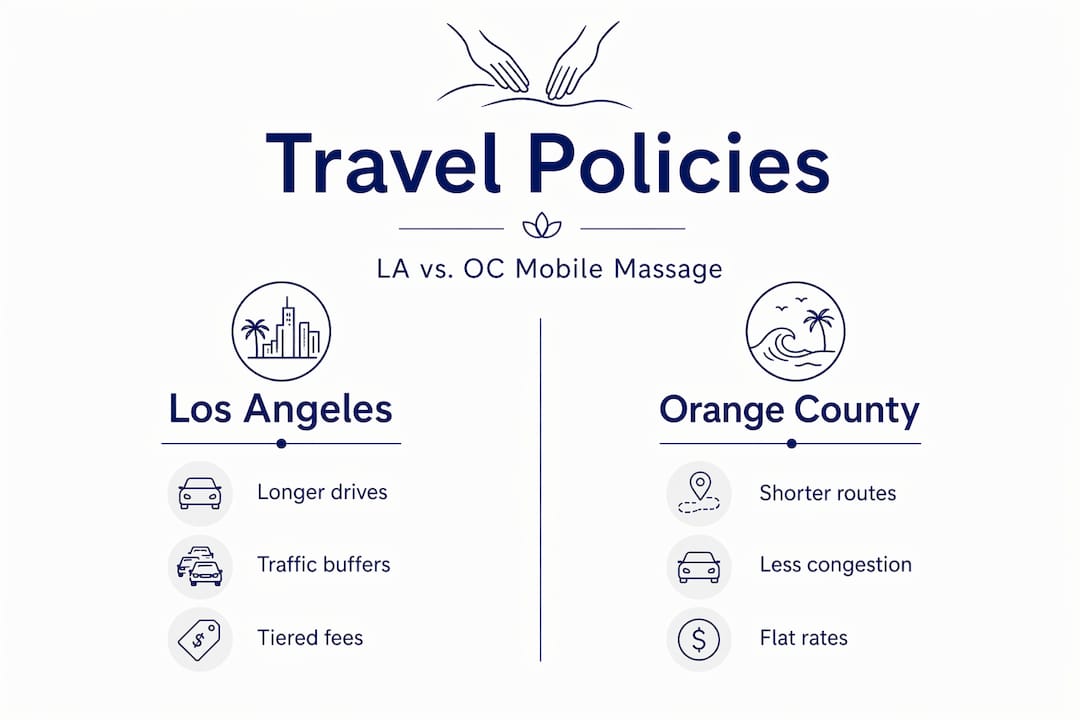
Understanding travel cost structures also helps you choose services that fit your budget without sacrificing quality.
Pro Tip: If you are booking a mobile massage for a group, the travel fee becomes much less significant per person. A single travel fee spread across four or five people at a bachelorette party or corporate wellness event is almost invisible on each individual bill.
Scheduling strategies to ensure quality and reduce travel stress
After exploring pricing models, it is important to understand scheduling tactics that support smooth client experiences.
Massage therapist commuting is not just about getting from point A to point B. It is about arriving calm, prepared, and ready to deliver a genuinely restorative session. That requires intentional scheduling.
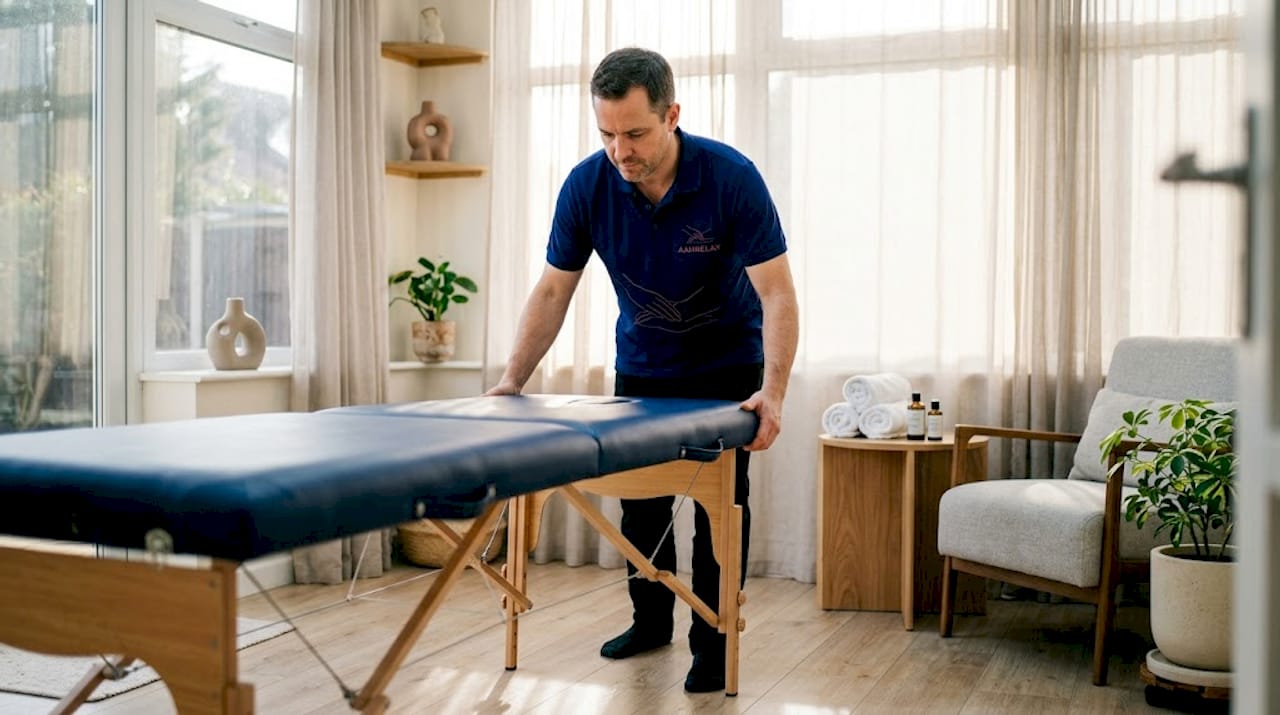
One of the most effective best practices for mobile massage is the use of travel time buffers. These are built-in gaps between appointments that give a therapist enough time to wrap up one session, pack their table and equipment, navigate to the next location, set up, and settle in. Without these buffers, a therapist who gets stuck in traffic on the 405 is already behind before they knock on your door.
Therapists use travel time buffers between appointments to account for traffic, setup, and cleanup, ensuring stress-free sessions for clients on both ends of the schedule.
How experienced mobile therapists schedule their day:
Geographic clustering: Grouping appointments in the same neighborhood or zip code on the same day. A therapist might do three sessions in Silver Lake on Tuesday and three in Newport Beach on Thursday, rather than crisscrossing the county daily.
Morning blocks near home: Scheduling early appointments close to their starting point to ease into the day without a long initial drive.
Avoiding peak traffic windows: When possible, scheduling mid-morning or early afternoon sessions to sidestep rush-hour delays on the 5, the 10, or Pacific Coast Highway.
Consistent session lengths: Keeping session times predictable (60 or 90 minutes, not mixed) makes buffer calculations reliable.
The benefits of scheduling buffers go beyond punctuality. A therapist who is not rushed brings a different energy to your session. That calm, focused presence is part of what makes in-home massage feel genuinely luxurious.
Pro Tip: When you book, try to give your therapist at least 24 to 48 hours of notice, especially in high-traffic areas of LA or OC. Last-minute same-day bookings in distant zones can disrupt a therapist’s geographic schedule and may carry higher fees.
What clients in Los Angeles and Orange County should expect from mobile massage travel policies
Now that you know how travel affects scheduling and fees behind the scenes, let’s discuss what this means for you when booking local mobile massage services.
Knowing how therapists reach clients is only useful if you know how to apply it. Here is what to look for when booking on-site massage therapy in Southern California.
What to expect as a client:
A clearly stated travel fee, either listed on the booking page or communicated before confirmation
A minimum session length or minimum booking value for locations beyond a standard service radius
A cancellation window (usually 24 to 48 hours) that protects the therapist’s travel time if you need to reschedule
Zone-based pricing if you are located in a more suburban part of Orange County or a hard-to-reach area of the San Gabriel Valley
Clear communication about travel fees and policies increases client trust and removes the friction that makes people hesitate to book.
Before booking a mobile massage, ask or confirm:
Does a travel fee apply to my location, and how is it calculated?
Is there a minimum session length or booking value required?
What is the cancellation policy if I need to reschedule?
How far in advance should I book to guarantee availability?
What to check | Why it matters |
Travel fee policy | Avoids surprise charges at checkout |
Cancellation window | Protects you and the therapist |
Minimum booking requirement | Ensures the session is worth the trip for both sides |
Zone or distance limits | Confirms the therapist actually serves your address |
Mobile massage pricing transparency is one of the clearest signs you are working with a professional service. And if you are still finding local massage services that check all these boxes in your area, a well-established platform takes the guesswork out of it entirely.
Rethinking travel time: why valuing the journey elevates your massage experience
Here is a perspective most clients never consider. Travel time is not overhead. It is the price of convenience, and it is worth paying gladly.
Think about what it actually means to have a trained, licensed massage therapist arrive at your home in Los Angeles or Orange County with a professional table, warmed oils, fresh linens, and hands that know exactly what your body needs. That therapist spent time planning the route, loading the car, and mentally preparing to serve you. None of that is free. None of it should be.
When clients push back on travel fees or look for the cheapest option without considering what goes into a mobile visit, two things happen. First, they often end up with an undertrained or underequipped provider who cut corners on logistics because they could not afford not to. Second, they contribute to a market where therapists burn out, lower their standards, or exit the profession entirely.
Valuing travel time properly is what sustains therapist quality and client satisfaction over the long run. A therapist who earns fairly for every part of their work, including the drive, shows up refreshed, motivated, and focused.
The most satisfied clients we see are the ones who understand this. They book mobile group massage benefits for larger events, they tip generously, and they respect cancellation policies. In return, they get therapists who genuinely look forward to their appointments. That exchange of respect is what makes a truly luxurious in-home experience possible.
Experience convenient, professional in-home massage services in Los Angeles and Orange County
If everything you just read resonates with you, then you already know what to look for in a mobile massage provider: transparent pricing, fair travel policies, thoughtful scheduling, and therapists who genuinely care about your experience.

That is exactly what you get with AahhRelax mobile massage. We serve clients throughout Los Angeles County and Orange County with clear, upfront pricing and a team of trusted, professional therapists who know the local roads, the local neighborhoods, and how to arrive calm and ready. Whether you are booking a solo session, a wellness party or event, or group massage treatments for a special occasion, our scheduling and travel practices are built to deliver a genuinely spa-level experience right where you are.
Frequently asked questions
Why do mobile massage therapists charge a travel fee?
Travel fees compensate therapists for the time and expenses spent traveling, since travel time is lost billable hours that could otherwise be spent serving clients. Without these fees, mobile therapy would not be financially sustainable for most practitioners.
How do therapists schedule appointments to handle travel efficiently?
Therapists use travel time buffers and geographic grouping to prevent delays and maintain high service quality across multiple sessions in a single day. Clustering appointments by neighborhood is one of the most effective ways to stay on schedule.
What should clients expect regarding travel policies when booking mobile massage?
Clients should expect clear upfront communication about travel fees, cancellation policies, and minimum booking requirements before confirming any session. Transparency here is a strong sign of a professional, well-run service.
Can travel fees vary based on location within Los Angeles County or Orange County?
Yes. Therapists often apply geofenced pricing tiers adjusted by travel distance, local demand, and the difference between urban and suburban areas. A session in Beverly Hills and one in Laguna Niguel may carry different travel components even at similar distances from the therapist’s base.
Recommended


Comments